
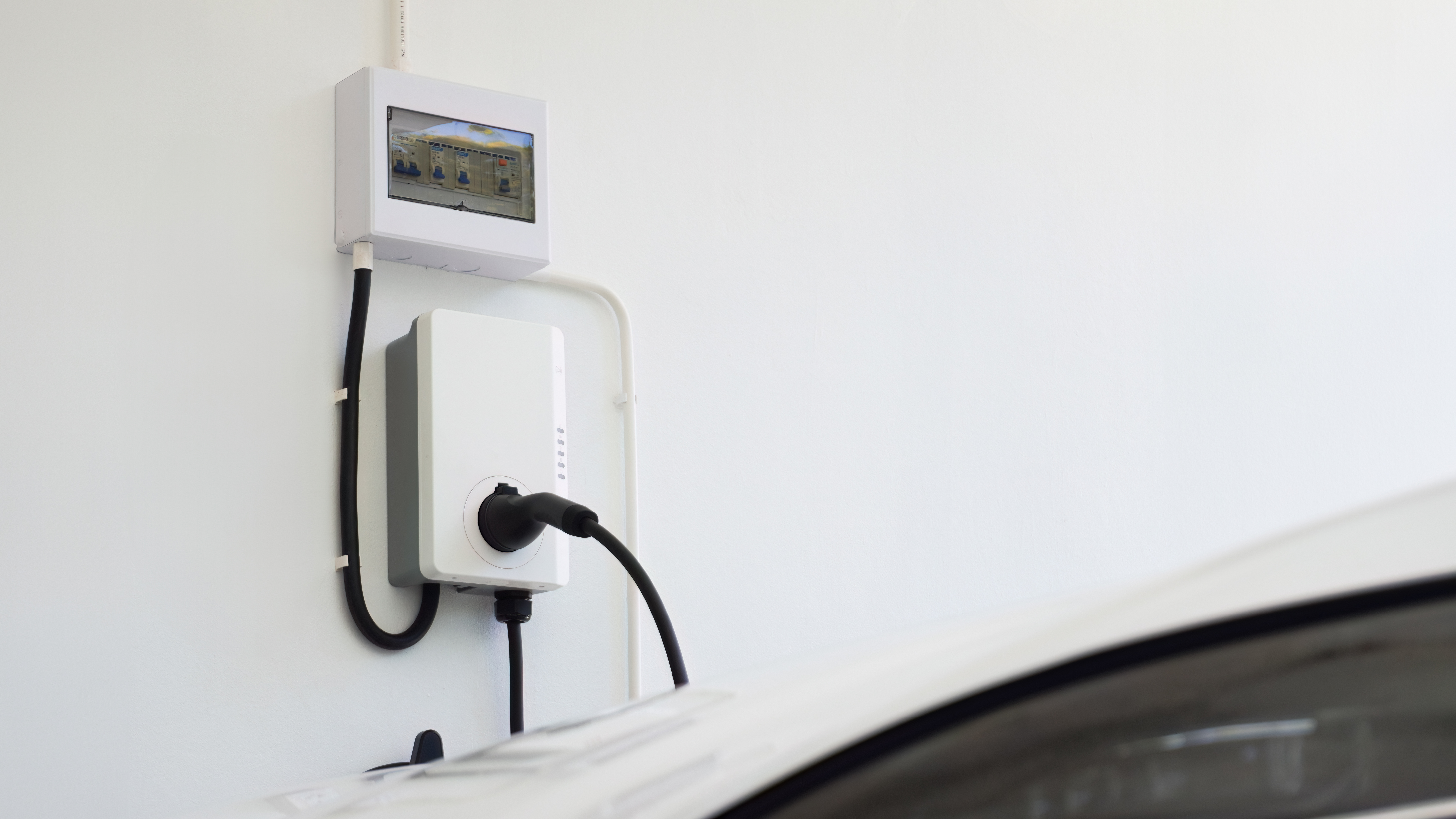
If you’ve just bought an EV or you’re an electrician getting more and more calls about them the biggest question is: “What does it actually take to get a charger in my garage or driveway?” This step‑by‑step guide breaks the process down in plain language, so licensed electricians, capable DIYers, and homeowners all know what happens from first walkthrough to first charge.
Before You Start: Safety, Permits, and Who Should Do What
Even though EV charging feels like “just another appliance,” you’re working with high‑amperage, continuous loads. That demands respect.
1. Decide who is doing the work
Licensed electricians
Should handle anything inside the panel, new 240 V circuits, conduit runs, and hardwired charger connections.
Are responsible for code compliance and making sure the system can safely support the additional load.
DIY‑inclined homeowners
Can help with planning: picking a charger, choosing a location, and making sure parking and cable routing make sense.
Should limit themselves to tasks that don’t involve opening a live panel unless they’re also licensed and qualified.
2. Check local code and permit requirements
Most jurisdictions require a permit and inspection for a new EV charging circuit or for hardwired Level 2 equipment.
Skipping permits can create problems with home insurance, future inspections, and resale.
3. Make safety the non‑negotiable step
Any time a panel is opened, the main breaker should be turned off and voltage verified before touching conductors.
Proper PPE, lockout/tagout (on professional jobs), and insulated tools should be standard practice.
Step 1: Choose Your Charger Type
The first decision is what kind of charging you actually need.
Level 1 vs. Level 2
Level 1 (120 V)
Uses a standard household outlet.
Very slow- good for light use, small batteries, or backup.
Level 2 (240 V)
Uses a 240 V circuit, similar to a range or dryer.
Significantly faster and the most common choice for home charging.
For most homeowners and landlords, Level 2 is the practical standard.
Plug‑in vs. hardwired
Plug‑in Level 2
Uses a 240 V receptacle (commonly NEMA 14‑50).
Easier to replace or upgrade the charger later.
Good choice for garages and covered parking.
Hardwired Level 2
Charger is permanently connected with field wiring.
Often preferred outdoors or in shared/semipublic spaces.
Typically supports higher amperages and looks cleaner and more secure.
Match the charger to your electrical system
- Common charger currents: 32 A, 40 A, 48 A, and higher.
Because EV charging is a continuous load, the circuit is usually sized at 125% of the charger’s rated current (for example, 40 A charger on a 50 A breaker).
This directly affects wire size, breaker size, and what your existing panel can support.
Step 2: Check Electrical Capacity and Panel Space
Before running any conduit, you need to know whether the system can handle the extra load.
Assess the main service and panel
Find the main breaker rating (for example, 100 A, 150 A, 200 A).
Take inventory of big existing loads: electric range, electric dryer, HVAC, electric water heater, pool equipment, etc.
Perform (or request) a load calculation
Electricians will do a proper load calc to see whether there’s capacity for the new EV circuit.
If the numbers are tight, options include:
Using a lower‑amp charger setting.
Adding a load‑management device.
Upgrading the panel or service.
Decide circuit size and conductor
Example guideline:
32 A charger → 40 A breaker.
40 A charger → 50 A breaker.
48 A charger → 60 A breaker.
Conductor gauge is chosen based on breaker size, run length, temperature, conduit fill, and local code.
Step 3: Choose the Best Location
Good layout is what makes an install feel “professional” and user‑friendly.
Think like the driver
Mount the charger or receptacle near where the car actually parks most of the time.
Make sure the cord reaches the charge port without stretching across walkways or under garage doors.
Avoid locations where the cable will constantly be run over or pinched.
Indoors vs. outdoors
Garage installs
Usually simpler: shorter runs, less exposure to weather, fewer protection issues.
Outdoor installs
Require weather‑rated enclosures and fittings.
May need in‑use covers for receptacles and mechanical protection (for example, conduit where vehicles or lawn equipment could hit it).
Mounting height and surface
Many manufacturers recommend around 36–48 inches from finished floor to the center of the unit, which suits most users.
Mount on a solid surface: wall stud, blocking, or masonry with proper anchors.
Step 4: Gather Tools and Materials
Exact materials depend on the charger and layout, but a typical Level 2 job includes:
Correct‑amp double‑pole breaker compatible with the panel.
Copper conductors or cable sized to the breaker (and run) using the proper insulation type.
Conduit (EMT, PVC, or flex), straps, fittings, and junction boxes as needed.
A 240 V receptacle and box for plug‑in installs, or a hardwire kit/whip for permanent installs.
Charger mounting bracket, screws, and anchors.
Tools: drill, bits, hole saw (if required), fish tape, wire stripper, torque driver, meter, non‑contact tester, PPE.
Having everything lined up before you start reduces trips back and forth to the supply house and keeps the job on schedule.
Step 5: Run the Circuit (For Electricians)
This is where a licensed pro earns their keep—inside the panel and through the structure.
Install the breaker
With power safely off and verified, install a 2‑pole breaker of the correct rating in adjacent spaces in the load center.
Confirm bus and breaker compatibility and label the breaker “EV Charger” or similar in the panel directory.
Route the conduit or cable
Plan the shortest, cleanest route from panel to charger location.
Use appropriate conduit type for indoor vs. outdoor and any damp or corrosive environments.
Strap and support conduit per code, and protect any exposed runs from physical damage.
Pull and terminate conductors
Pull the properly sized conductors from the panel to the charger or receptacle box.
At the panel: land on the 2‑pole breaker and the equipment grounding bar (and neutral if required by the design).
At the charger or receptacle: connect hot, hot, ground (and neutral if needed) per the wiring diagram and torque specs.
Step 6: Mount and Connect the Charger
Now you bring the hardware to life.
Mount the box or bracket
For plug‑in chargers:
Mount a box at the planned height and install the 240 V receptacle.
For hardwired chargers:
Mount the manufacturer’s bracket or backplate securely, then hang the EVSE enclosure.
Make final connections
Plug‑in style:
Terminate conductors on the receptacle’s terminals (L1, L2, ground, neutral if applicable).
Hardwired:
Bring field wiring into the charger’s junction area and connect to the terminal block or whip, following polarity and torque requirements.
Weatherproofing and cleanup
Seal outdoor boxes and fittings with the appropriate gaskets.
Install in‑use covers where required.
Add hooks or a holster so the charging cable is stored neatly and off the floor.
Step 7: Power‑Up, Configure, and Test
Here’s where homeowner, DIYer, and electrician all see the payoff.
Restore power
Double‑check that all covers are on, tools are removed, and connections are tight.
Turn on the main breaker (if it was off) and then the new EV circuit breaker.
Verify voltage at the receptacle or charger terminals as appropriate.
Configure charger settings
Many Level 2 chargers let you set maximum current to match the circuit.
If the unit has Wi‑Fi or Bluetooth, you can:
Connect it to an app.
Set charge schedules (for off‑peak rates).
Monitor usage and, on some models, enable load‑sharing features.
Test with the vehicle
Plug in the EV and confirm:
The charger shows normal operation (no fault lights).
The vehicle reports it is charging.
The breaker and wiring remain cool under normal operation.
If any faults show up, shut the circuit off, troubleshoot wiring and settings, and retest.
Step 8: Inspection, Documentation, and Long‑Term Use
Close out the job
Where required, schedule the electrical inspection after successful testing.
Be prepared to show:
Breaker size, conductor size, and routing.
Charger specifications and installation instructions.
Any load calculations used to justify the design.
Keep good records
Store the permit, inspection report, charger manual, and any configuration notes with the home or building paperwork.
This makes future service, warranty work, or resale much easier.
A Quick Example: Small Rental Garage
A landlord with a duplex and shared garage wants “EV‑ready” parking for future tenants. An electrician checks the 200 A service, verifies there’s capacity, and installs:
A new 50 A 2‑pole breaker in the main panel.
EMT conduit from the panel to two parking bays.
A pair of 240 V receptacles and two wall‑mounted Level 2 plug‑in chargers.
The job gives the property an attractive amenity, the electrician a repeat client, and tenants plug‑and‑play convenience, all with a clean, code‑compliant layout that’s easy to expand later.
Need Material Support for Your Next EV Job?
Whether you’re an electrician wiring a dozen Level 2 chargers or a homeowner coordinating a single install, the right material on the truck is what keeps projects moving and inspectors happy. A dedicated electrical supply house like Kilowatts Electric Supply can help you:
Match charger specs to the correct breakers, wire, and fittings.
Choose weather‑appropriate enclosures and conduit systems.
Pull a complete EV charger “bill of material” at the counter so you’re not making multiple trips mid‑job.
Stop by our branch counter to talk through your EV charging project, get help sizing the circuit, and walk out with the breakers, wire, conduit, boxes, and accessories you need for a safe, professional install.